


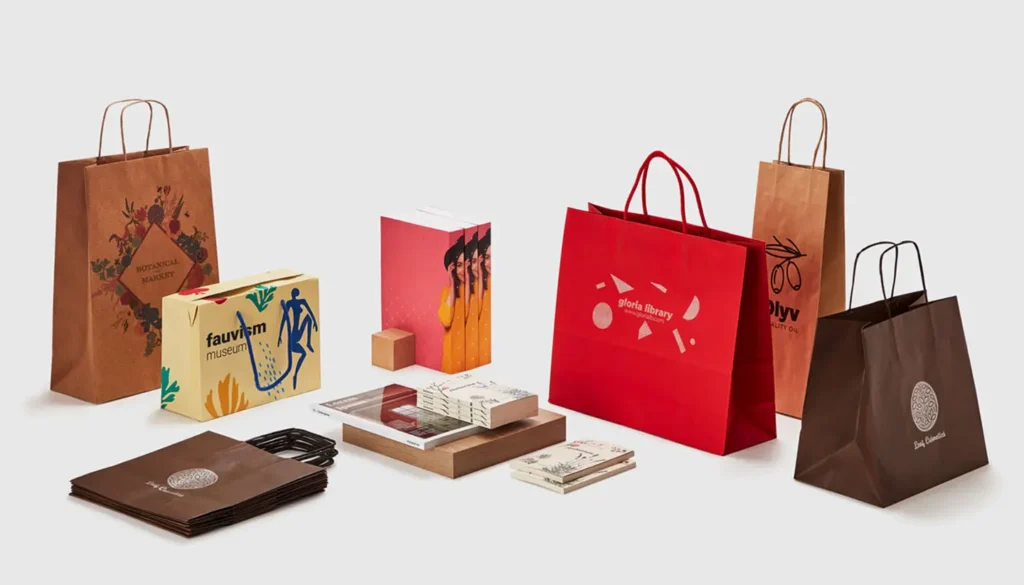
There is a pattern that comes up with paper bags printing orders more than almost any other print job. Someone has a clear picture in their head of what they want for their paper bags printing design. They send a file across, answer a few quick questions, and move on assuming everything is sorted. Then the bags arrive and something is off.
The handles are shorter than expected. The color printed darker than it looked on screen. The bag size doesn’t quite fit the product properly.
None of these are dramatic problems individually but together they mean a reorder, a delay, and a cost that nobody budgeted for. Getting paper bags printing right the first time is not complicated but it does require a brief that covers the right things from the start.
Start With the Product Going Into the Bag
This sounds obvious but it’s the most commonly skipped step. A lot of people start the brief with the bag dimensions they think they want rather than the product dimensions they actually have.
The bag needs to fit the product comfortably with enough room for tissue paper, a box, or whatever else is going inside. Measure your actual product. Height, width, depth. Then add at least two to three centimeters on each dimension to give realistic clearance. If your product is irregular in shape, bring it to the supplier or send a photo alongside the dimensions.
A bag that’s too tight damages the product when it’s being placed inside. A bag that’s too loose collapses at the sides and looks wrong when it’s being carried. Both are avoidable with accurate product measurements upfront.
Know Your Handle Type Before You Order
Handle type changes the look, the feel, the cost, and the production timeline of the bag. It’s a decision that needs to be made before anything else is confirmed.
The main options for online bag printing orders are:
Twisted paper handles are the most common and most affordable. They give a casual, everyday retail feel. Standard for food bags, market bags, and general retail.
Flat ribbon handles look more premium and are better suited to boutique retail, gifting, and fashion. The ribbon can be color-matched to the brand which adds a finishing detail that twisted handles can’t offer.
Rope handles are thicker, more substantial, and suitable for heavier products. They’re used a lot for higher-end retail bags where the weight of the bag needs proper support.
Die-cut handles are cut directly into the top of the bag rather than being attached separately. They’re integrated, clean, and work well for food bags and simpler retail applications.
Knowing which handle you want before you brief means the supplier can give you an accurate quote and timeline rather than going back and forth after the fact.
The Paper Weight Question
GSM is the measurement for paper weight and it directly affects how the finished bag feels in the hand and how well it holds up in use.
For most retail bags, 100gsm to 150gsm works well for lighter products. For bags carrying anything with real weight, shoes, bottles, heavier gift items, 170gsm to 200gsm is a more appropriate starting point.
A bag that’s too light for its contents will bow at the sides, struggle at the base, and start to look tired before it’s even been used. Ask your printing company in UAE specifically what weight they’re recommending for your product and use case rather than just going with whatever is standard.
Provide Proper Color References
Color is where most paper bags printing orders create post-delivery frustration. Screens display colors in RGB. Printers use CMYK. The conversion between these two systems doesn’t always produce what you expected, particularly for specific brand shades.
Before you finalize any order:
- Convert your brand colors to CMYK in your design file before exporting
- Include Pantone references if you have them, they give the most accurate match
- Ask whether a proof or color sample can be provided before the full run
If you’ve had bags or other branded materials printed before and want to match them, bring a physical sample to the conversation. Describing a color verbally is less reliable than putting a reference in front of the supplier.
Be Specific About Print and Finish
The default finish option is not always the right one for every brand. Have the conversation about finish before the order is placed.
Matte lamination gives a flat, premium feel. Gloss is brighter and more vivid. Uncoated kraft has a natural, earthy quality that works for food and artisan brands. Each affects how the color reads and how the bag feels in the customer’s hand.
If your bag is going to be reused, gifted, or kept rather than just carried once, the finish is part of the brand experience. Spend two minutes talking about it before production starts.
Give the Real Deadline Upfront
This is the piece of the brief that gets handled vaguely most often. If you need bags by a specific date for an event or a launch, say that clearly at the start of the conversation, not a few days before the deadline arrives.
Color Print, a printing company in UAE builds production timelines around real delivery dates when they’re communicated clearly from the beginning. A bag order that has been properly briefed and has a confirmed deadline is a completely different process from one that’s being rushed through at the end.
Good online bag printing results come from good briefs. Everything else follows from getting that part right.