


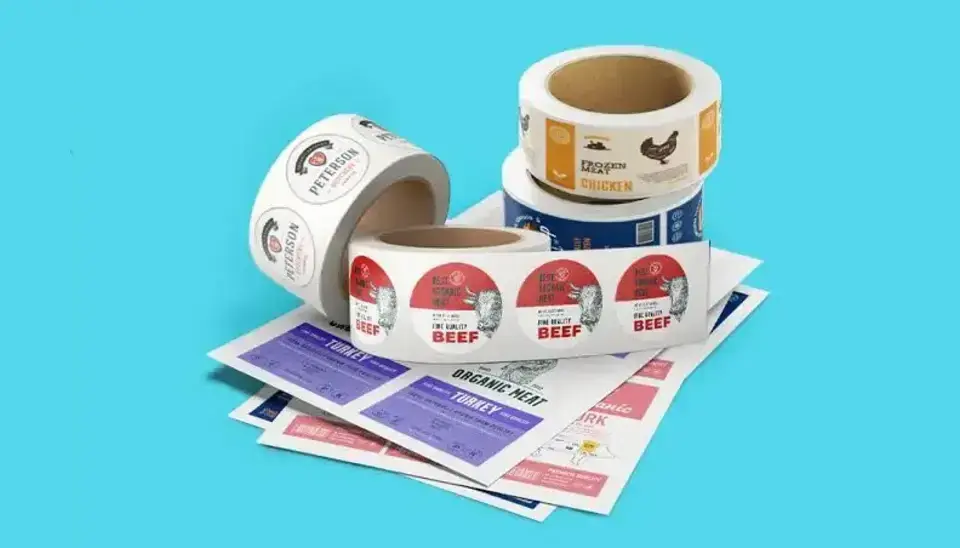
Cloud kitchens can prevent those infuriating labels from peeling off during refrigeration and food delivery by making a few key choices with the materials they use, like opting for moisture-resistant labels, special cold temperature adhesives, and finishes that’ll play nice with packaging. It’s all about getting labelling and stickers printing right too. stickers need to be applied to clean, dry surfaces at the right temperature, otherwise product details become a jumbled mess and the labels fall off at the most inopportune moments.
Which is why labels and stickers printing should take into account the actual conditions of your kitchen, not just how cool it looks on the outside.
Why Food Labels Fall Off During Cold Storage and Delivery
A label might stick perfectly when first applied but then just start to lift after a few hours in the fridge. This usually happens because the adhesive, the packaging or how you applied it aren’t quite right for the environment it’s in.
Condensation is Like a Ticking Time Bomb
When you take a container out of the fridge and slap a sticker on it, moisture can build up and that makes it super hard for the adhesive to stick properly.
For example, a cloud kitchen might take some packed salads out of the fridge, slap on a delivery label and then they’re off. The problem is, if there’s moisture on the container, the sticker can just fall off while it’s being transported.
Temperature Changes Affect Adhesive Performance
Cold conditions can really knock the initial grip of some pressure-sensitive adhesives. This is especially true when labels and stickers printing are equipped onto already refrigerated containers.
According to Avery Dennison, the guys who know a thing or two about labelling, you need to consider both the application temperature and the service temperature when picking an adhesive.
And to make things even more complicated, an adhesive that can stick in the freezer isn’t necessarily one that will stick to an already frozen container.
Packaging Matters Just as Much as Adhesives
Cloud kitchens use all sorts of packaging, from plastic bowls to cardboard boxes and sealed trays. Some of these can offer a super smooth surface that helps the sticker stick, but others can be a nightmare to work with.
Polypropylene (PP) and polyethylene (PE), both pretty common in food packaging, can be a bit of a challenge to get an adhesive to stick to. For label sticker printing in Dubai, kitchen operators need to get some actual packaging samples into the labelling people so they can get the adhesive just right.
And just to make it even more interesting, a sticker that works perfectly on a flat plastic lid might fall off the first time it’s tried on a curved container.
How to Avoid Labels Peeling Off Before Delivery
The best approach is to get the labelling right from the start.
Stick ’em on Before Condensation Sets In
If possible, try and slap on the labels before the container goes into the fridge. Make sure you follow the adhesive manufacturer’s recommendations for temperature and bonding conditions.
Give Stickers a Clear Run
Try not to put important labels in tricky places like seams or curves. These areas get handled a lot and friction can make the sticker fall off. If you can, put labels on flat surfaces where they’ll get less wear and tear.
Testing Food Labels Under Real Delivery Conditions
Before giving the green light to a big labels and stickers printing order, do a small trial first:
- Slap a few sample labels onto actual food containers.
- Chuck them in the fridge and let them sit there for a bit, just like you would with the rest of the food.
- Now move those containers through a simulated packing and delivery process, just to see how they hold up.
- Give the labels a once over for peeling, wrinkles, moisture damage, and fading.
- And make sure you can still read all the printed dates, order numbers, and barcodes.
These checks will let you know if your labels are going to cause any problems before they affect customer orders.
Printing Quality and Readability During the Delivery of Food
A label that sticks alright but just becomes unreadable is still a major problem.
Kitchen staff and delivery partners need to be able to quickly identify meal names, customer orders, preparation dates and storage instructions all from a label that’s easy to read.
You want clear typography, good contrast, and printing that’s going to stay legible even when it gets a bit wet.
For businesses looking at label Sticker Printing in Dubai, print quality and durability should be just as important as the price.
And cloud kitchens especially can also benefit from separating out the permanent branding stuff from the bits that change all the time. Preprinted branded stickers can handle the logo, while variable data printing can sort out the variable stuff like orderspecific details.
That way, you avoid having to redesign the labels every single time the menu changes or you want to print out some new details.
Frequently Asked Questions
1. What’s the best sticker material for refrigerated food packaging?
For a lot of people, moisture-resistant BOPP film is a pretty good option for refrigerated containers. But it still comes down to finding an adhesive that’s compatible with the packaging surface and the temperature you’re applying it at.
2. Why do food labels just peel after they go in the fridge?
It’s often because of condensation, or the wrong adhesive, or applying the labels in the cold, or making a mess with the surface, or not getting good contact around the edges of the container.
3. Can waterproof stickers go in the freezer?
Some of them can if the material and the adhesive are rated for it. Don’t get it confused with being able to put them on a frozen surface, though.
4. Should cloud kitchens slap the labels on before or after they go in the fridge?
Applying them when they’re clean and dry before you put them in the fridge is usually the way to go, if you can do it. But if they’re already in the fridge, you might need one of those special adhesives that works in the cold.
5. How can kitchens check if stickers are any good before they buy a whole bunch?
Get some samples, slap them on actual containers, and see how they do in the fridge, in your hands, and on delivery before you greenlight production.
6. Where can cloud kitchens go to get custom food packaging stickers in Dubai?
If you need Sticker Printing in Dubai then you’ve got places like Color Print you can check out for custom label printing including material, size, finish and how many you need. And make sure to get some samples and test them in the cold before you order a load.
Conclusion
Getting labels and stickers printing that will actually stick and stay legible starts with understanding what they actually go through after they leave the kitchen. And that’s a lot condensation, temperature changes, container materials, and adhesive compatibility are all things that can make or break a label.
Using the right materials, carefully applying them, and testing in real-world conditions, operators of cloud kitchens can reduce relabeling issues and maintain clear food information throughout delivery runs.
So before you go and place your next label sticker printing order, have you actually tested whether your labels are going to be able to handle the same cold storage and delivery conditions as your food?