


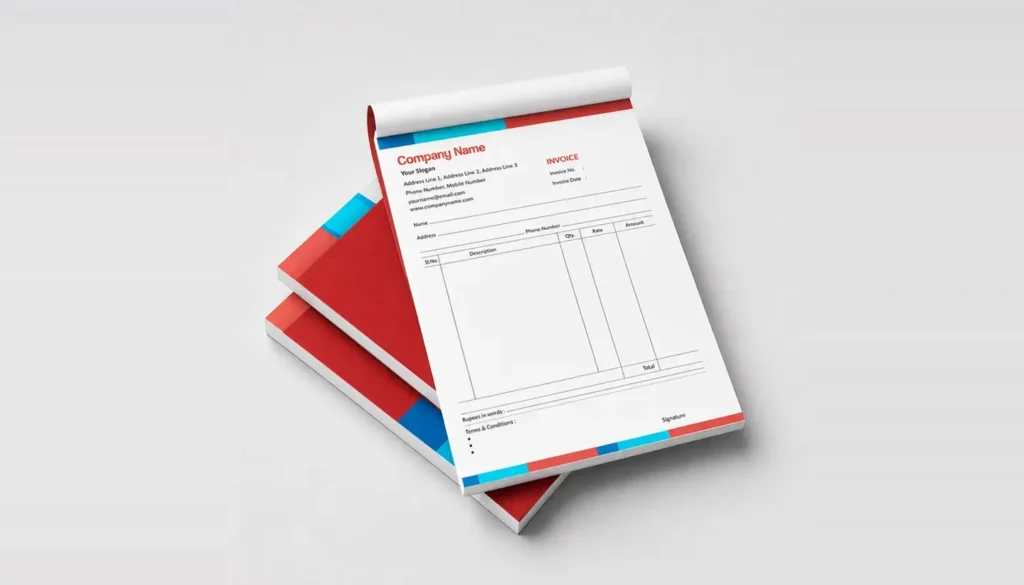
Stationery printing helps construction contractors in Dubai prevent payment disputes by keeping variation orders, approvals, additional work costs, and invoice records properly documented. Custom-printed forms with sequential numbering, authorized signatures, and clear project references make it easier to track changes, verify completed work, and connect approved variations to accurate billing.
Construction projects rarely go exactly as planned. A client requests an additional wall, an engineer changes material specifications, or unexpected site conditions require extra work.
The work gets completed, but when the contractor submits the invoice, the client questions the additional charges.
Often, the problem isn’t the work itself. It’s the missing paperwork.
For construction businesses in Dubai, properly designed documentation can make the difference between a straightforward payment process and weeks of back-and-forth discussions.
Why Variation Orders Create Payment Disputes in Construction
A variation order records an agreed change to the original construction scope. It may involve additional materials, revised quantities, design modifications, or changes affecting project costs and timelines.
Disputes commonly arise when contractors proceed without following the contract’s approval procedure.
Common documentation problems include:
- Verbal instructions without written confirmation.
- Missing client or consultant approvals.
- Additional material costs without supporting records.
- Unclear descriptions of completed work.
- Invoices that cannot be matched to approved variations.
Even completed work can become difficult to bill when supporting documentation is incomplete.
This is where stationery printing becomes an operational tool rather than simply an administrative expense.
How Custom Variation-Order Forms Improve Construction Documentation
A properly designed variation-order form should answer four questions: What changed? Who requested it? What will it cost? Who authorized it?
Include Essential Approval and Cost Fields
Construction contractors should consider including:
- Project name, location, and contract reference.
- Unique variation-order number.
- Description and reason for the proposed change.
- Revised material quantities and labor costs.
- Estimated effect on project completion.
- Client or consultant approval fields.
- Dates and authorized signatures.
These details create a consistent record that project managers and finance teams can review.
However, printed signatures alone don’t guarantee payment entitlement. Approval must follow the relevant construction contract’s procedures and authorized roles.
Use Sequential Numbering to Track Changes
Imagine a contractor managing 25 variation requests across several projects.
Without consistent numbering, identifying which changes were approved, rejected, or revised becomes unnecessarily difficult.
Sequentially numbered forms help teams reference each request and identify missing records.
For example, a variation labeled VO-025 can be linked to its supporting quotation, material records, and eventual invoice.
Variation-Order Forms vs. Invoice Books: Understanding Their Roles
Both documents support financial accountability, but they serve different purposes.
| Document | Primary purpose | Important details |
| Variation-order form | Documents proposed changes and approvals | Scope, costs, signatures |
| Material requisition | Records requested construction materials | Quantities, specifications |
| Site completion record | Confirms work performed | Date, location, acknowledgment |
| Invoice book | Records billed amounts | Invoice number, approved charges |
These documents work best when they share consistent project and variation references.
A contractor shouldn’t rely on an invoice alone to establish that additional construction work was authorized.
How Invoice Book Printing Supports Accurate Construction Billing
Once additional work has been properly approved and completed, the next challenge is connecting that work to the payment request.
Professional finance Book printing allows contractors to customize billing forms around their project documentation requirements.
Connect Each Invoice to an Approved Variation
An invoice for additional construction work should clearly identify the corresponding variation-order reference.
Suppose an approved variation covers additional electrical installations.
Instead of writing “extra electrical work,” the invoice could reference the variation number, agreed scope, approved amount, and applicable payment terms.
This makes verification easier for the client’s accounts team.
Use NCR Copies for On-Site Documentation
Carbonless NCR paper allows information written on the original sheet to transfer to additional copies.
Depending on the workflow, a triplicate arrangement might provide copies for the client, site administration, and accounts department.
With invoice printing in Dubai, contractors can request customized NCR books featuring perforation, numbering, company branding, and suitable writing space.
Practical Printing Choices That Reduce Documentation Errors
Good stationery printing starts with understanding how documents will be used on construction sites.
Consider these practical decisions:
1. Choose Readable Layouts
Avoid squeezing too many fields into a small form. Complex variation orders may need A4 layouts to accommodate detailed descriptions and signatures.
2. Protect Records From Site Conditions
Construction paperwork often travels between site offices, vehicles, and storage areas.
Sturdy backing boards, secure binding, and protective folders help minimize handling damage.
3. Match Copy Quantities to Departments
Duplicate or triplicate forms should reflect actual recordkeeping needs.
Printing unnecessary copies increases paper consumption without improving accountability.
4. Review Artwork Before Reordering
Project details, approval roles, and company information may change.
Approving the latest artwork before bulk Invoice Book printing helps prevent outdated forms from circulating across sites.
5. Maintain Digital Backups
Scan completed forms and store them under their project and variation references.
Paper documentation can support on-site approvals, while digital records improve retrieval and coordination.
Choosing Printing Services for Construction Businesses in Dubai
Construction contractors should prioritize customization, print clarity, numbering accuracy, and consistent reordering over decorative finishes.
Color Print provides business stationery and NCR invoice printing alongside its wider 3D signage and commercial printing services in the UAE. Its printing options can support construction businesses requiring customized forms, branded documents, and organized project paperwork.
When evaluating invoice printing in Dubai, contractors should request an artwork proof and test whether the finished layout is practical for site personnel before ordering larger quantities.
Frequently Asked Questions
1. What is a variation-order form in construction?
A variation-order form documents proposed changes to the original construction scope, including revised work, costs, timelines, and required approvals.
2. Can printed variation-order forms help prevent payment disputes?
Yes. They can provide clearer evidence of requested changes and approvals, although contractual compliance remains essential.
3. Why do contractors use numbered invoice books?
Sequential numbering helps identify transactions, match invoices with supporting documents, and investigate missing billing records.
4. Are NCR invoice books suitable for construction sites?
Yes. NCR books provide multiple handwritten copies without separate carbon sheets, making them useful for field documentation.
5. What should contractors check before ordering Invoice Book printing?
Check the layout, company details, numbering sequence, NCR copy quality, signature space, and project-reference fields.
6. Can printed invoice books replace digital accounting systems?
No. Printed records can support operational documentation, but businesses must still meet applicable accounting, tax, and electronic invoicing requirements.
Conclusion
Construction payment disputes often become more complicated when approved changes, completed work, and billing records cannot be connected.
Well-planned stationery printing helps contractors organize that documentation through consistent variation forms, numbered invoice books, and clearly defined approval fields.
For contractors considering invoice printing in Dubai, the real value lies in creating paperwork that supports the entire process, from site instructions to final payment.
If an additional construction cost is questioned tomorrow, will your paperwork clearly show who approved the work, what changed, and why the amount was billed?