


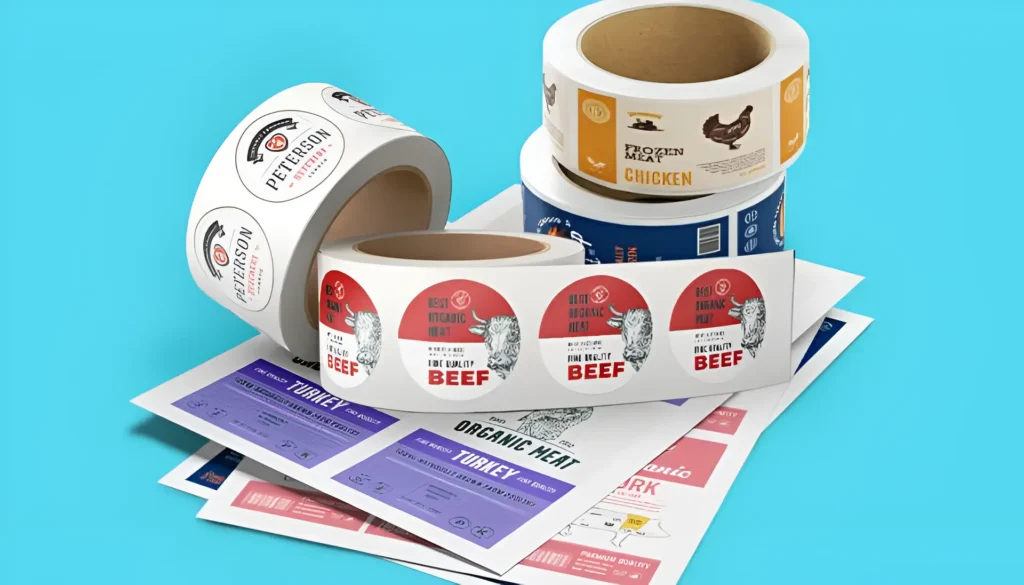
In labels and stickers printing, material refers to the base stock the label is printed on, adhesive type determines how and where the label sticks, and coating affects the surface finish and durability.
These three elements collectively make sure that your label will stick, look aesthetically pleasing, and work in its actual environment. Ensuring that you get them right before your order guarantees that you avoid the typical and expensive mistakes that can be made when printing labels.
When businesses place their first orders for labels and stickers printing, the majority of their concern lies in the designing process. The colors used, the shape of the label, and the information that should go into the label surface. However, there is an underlying process that takes place after the designing of your label and determines the success of the final label.
A perfectly designed label that falls off a bottle after just two days inside a refrigeration unit is not a successful label at all. Label sticker printing requires three main choices about the materials used which occur before any design work. These include adhesive, material, and coating and they collectively determine the performance of the label in its actual environment.
Label Material and Adhesive Comparison
| Material | Best For | Water Resistance | Durability | Adhesive Options |
| White paper | Dry product labels, indoor use | Low | Low to medium | Permanent, removable |
| Kraft paper | Artisan, food, eco branding | Low | Low | Permanent |
| White vinyl | Outdoor, waterproof applications | High | High | Permanent, removable |
| Clear vinyl | Glass bottles, cosmetics | High | High | Permanent |
| Polyester | Industrial, chemical resistant | Very high | Very high | Permanent |
| Metallic film | Premium packaging, beauty | Medium | Medium to high | Permanent |
Material: What the Labels and Stickers Printing Is Actually Made From
The material is the substrate upon which the label print will be printed and also the adhesive that binds the label to its product. The material will dictate the look of the label prior to any print being added, the ease of handling it during the manufacturing process, and even the performance of the label after it has been applied on the product.
The common materials used in sticker label printing in Dubai include:
White paper is the most popular material for dry products labels, non-moisture exposed food packaging, and for general indoor applications. This material can be easily printed using digital printing technology and is compatible with several types of coatings. The material can only be used where there is no moisture. Paper based labels are not suitable for refrigerated products, outdoor, or moisture prone situations.
Kraft paper has a brown natural look that suits artisanal food brands, organic product lines, and for any brand whose identity involves the natural or handmade look. It offers little protection against moisture and the brown background makes color reproduction difficult. Therefore, single or two color labels are best suited for kraft paper.
White vinyl is the most versatile material for labels and stickers printing that need to be durable. The material is water-resistant, tear-resistant, and suitable for outdoor use and storage in refrigerators. Products such as bottles, cans, outdoors equipment, and any products that will be exposed to moisture often can have vinyl labels applied.
Clear vinyl is durable like white vinyl but transparent, often used on glass containers to give a “no label” look. It’s popular in cosmetics and beverages.
Polyester is a highly durable material used for industrial and chemical labels.
Adhesive Type: How and Where the Label Sticks
The adhesive for sticker label printing is the coating that adheres the label to the surface. There are different types of adhesives that adhere the labels to surfaces of varying temperatures and depending on whether or not the label needs to be removed.
Permanent adhesive is one that bonds a label very strongly. It forms a bond that is hard to separate without damage to either the label or the surface. This type of adhesive is right for most product labels as the label should last throughout the product’s life span.
Removable adhesive is one that creates a bond that is removable without damaging the surface. This type of adhesive is ideal for promotional labeling and pricing stickers, etc. Its bond is weaker than that of permanent adhesive and may peel off when warm; this should be taken into consideration when considering Dubai’s weather.
Freezer grade adhesive does not weaken under freezing conditions and thus maintains the bond. Normal permanent adhesive weakens under freezing temperatures. If the label is put on under such circumstances, it will peel off. Products that go into cold chain storage or freezer retailers need a label with freezer-grade adhesive.
High-tack adhesive is a stronger variant of the permanent adhesive, which is used for surfaces such as textured, oily or low-energy plastics, on which the regular adhesive won’t provide sufficient bonding. There are some plastic containers and recycled material packaging, which require the specification of high-tack adhesive.
Coating: What Protects the Print and Defines the Surface
Coating for sticker label printing is a film that is put over the printed surface to protect ink, give a certain finish quality, and add durability in some cases.
Gloss lamination creates a smooth and shiny surface, which makes all the colors brighter and more vivid. In case of label stickers, which are printed to be applied on products and whose color effect is important, the gloss will work perfectly. Gloss coating also adds moisture protection to paper-based labels and thus increases their durability.
Matte lamination creates a smooth and matte surface, which makes the colors less bright, although the overall look is more refined and sophisticated. The effect is especially effective for beauty and cosmetics or food products, where sophistication is more important than color brilliance.
Soft-touch lamination is a more luxurious type of matte lamination with a little velvet-like finish.
The waterproof overlaminate coating provides an extra layer that is specially designed to be water, moisture, and humidity resistant. This is what should be specified for all labels on paper that will go into a refrigerated area or near water.
FAQs
What is the most durable material for product labels in Dubai’s climate?
Vinyl is the most durable option for product labels in Dubai, particularly for outdoor use, refrigerated products, or anything exposed to moisture or heat. White vinyl with a UV-resistant overlaminate holds up well in direct sun conditions that cause paper labels to degrade quickly.
Can paper labels be used on bottles?
Paper label and sticker printing can be used on dry glass bottles in controlled environments. For bottles that will be refrigerated, submerged in ice, or handled with wet hands, vinyl with waterproof adhesive and overlaminate is the correct specification. Paper labels on wet bottles will peel, wrinkle, and look unprofessional quickly.
What adhesive type is best for labels on plastic containers?
Standard permanent adhesive works on most smooth plastic surfaces. Textured or recycled plastics, or certain low-energy plastics, may require high-tack adhesive for a reliable bond. Testing the adhesive on the actual container before a full production run is the most reliable way to confirm compatibility.
Getting the Specification Right Before Production Begins
The packaging design along with the brand material is an essential element of the perception of the product through all the stages, starting from production and finishing with the end customer.
Labels and stickers printing is one of the most explicit forms of this branding, and the material, adhesive, and coating choices made before the production will decide how the sticker will perform in the conditions that it should perform.
The Color Print cooperates with companies from Dubai when it comes to their label stickers printing orders that require confirmation of the complete specification before the beginning of any production processes. This is the only way it is possible to get stickers that will behave as they were planned.